Introduction to Lean Manufacturing: Overview and Importance
Understanding Lean Manufacturing
Lean manufacturing is a methodology that focuses on minimizing waste while maximizing productivity. By streamlining production processes, companies can enhance their operational efficiency, which is crucial for staying competitive in today’s dynamic market conditions. Emphasizing customer value, continuous improvement, and waste reduction are core aspects of lean manufacturing.
Through operational efficiency strategies, businesses can significantly boost their production output. The principles of lean manufacturing originate from centuries of innovation in industrial practices designed to refine workflows and improve quality outcomes.
Historical Context
The history of lean manufacturing can be traced back to the early 20th century, with roots in the Toyota Production System pioneered by Taiichi Ohno in Japan. This system evolved into comprehensive methodologies aimed at reducing waste and improving flexibility within production systems. The influence of these early innovations persists in modern lean practices, serving as a backbone for process optimization across industries.
Understanding the evolution of these methodologies is essential for grasping the full potential of lean techniques in reducing downtime and enhancing production efficiency. This understanding provides a foundation for implementing effective lean strategies today.
Importance in Modern Industry
In today’s fast-paced, competitive industrial landscape, the importance of lean manufacturing cannot be overstated. Businesses face pressure to deliver high-quality products while maintaining cost-effectiveness. By adhering to lean principles, companies can achieve these goals, reinforcing customer satisfaction and market standing.
The lean approach proves invaluable in modern sectors by promoting agility and resilience against market shifts. Its emphasis on continuous improvement encourages a culture of excellence, ensuring long-term sustainability and profitability.
Overall, lean manufacturing principles provide vital tools for any organization aiming to optimize production processes effectively and sustainably.

A smiling worker in protective gear next to heavy-duty industrial machinery for lean manufacturing.
Core Principles of Lean Manufacturing: Detailed Analysis
Eliminate Waste
Waste elimination is a fundamental principle of lean manufacturing. It involves identifying and removing processes that do not add value to the end product. Such processes increase costs and reduce efficiency, making it imperative for businesses to routinely evaluate their operations for waste.
By focusing on waste elimination, companies can improve their equipment lifespan, enhance product quality, and streamline processes. This approach reduces unnecessary spending, allowing funds to be reallocated towards more critical areas such as innovation and employee development.
Enhance Productivity
Improving productivity is central to lean manufacturing, involving several key practices:
- Efficient resource use: Optimizing every part of the production process to ensure minimal waste and maximal output.
- Process evaluation: Continuous assessment of each phase of production to identify bottlenecks and streamline operations.
- Employee involvement: Engaging employees in the improvement process fosters a culture of accountability and innovation.
- Continual improvement: Constantly refining processes to enhance quality and speed.
- Reduced waste: Implementing strategies that inhibit waste generation at every production stage.
- Increased output: Boosted production rates through enhanced methodologies and efficient resource management.
Focus on Customer Value
Customer value is at the heart of lean manufacturing. The ultimate goal is to enhance the end user’s experience by producing defect-free products swiftly and efficiently. This focus helps businesses maintain a competitive edge by consistently meeting and exceeding customer expectations.
Prioritizing customer value ensures that all enhancements align with market demands, thus promoting satisfaction and loyalty.
By integrating customer feedback into the improvement process, organizations can better tailor their offerings to specific needs, fostering trust and reputation.
Applying Lean Tools and Techniques in Manufacturing
Just-In-Time Production
Just-In-Time (JIT) production is a lean strategy that ensures materials and products are delivered right when needed in the production process, eliminating excess inventory and reducing waste. By synchronizing supply with demand, JIT helps manufacturers respond rapidly to market changes while minimizing overhead costs.
This technique also emphasizes quality enhancement and time management, leading to improved preventive maintenance practices and ensuring a smooth, uninterrupted workflow.
Kaizen and Continuous Improvement
Kaizen, meaning ‘continuous improvement,’ is a philosophy that encourages constant, incremental enhancements in processes. It involves every employee in suggesting and implementing changes, thus fostering a culture of ongoing development and innovation. The approach helps in creating a dynamic work environment that thrives on adaptability and efficiency.
By integrating Kaizen, companies improve equipment reliability and can better address broad operational challenges.
Commitment to continuous improvement results in higher efficiency, increased employee morale, and reduced wastage, setting a foundation for long-term success.
Value Stream Mapping
Value Stream Mapping (VSM) is a crucial tool in lean manufacturing that helps visualize and analyze the flow of materials and information.
- Identify process flows: Mapping out all steps involved in the production, from start to finish.
- Visualize bottlenecks: Spotting areas where delays occur, enabling strategic adjustments.
- Analyze waste points: Identifying steps that do not add value and can be eliminated or improved upon.
- Encourage collaboration: Involving cross-functional teams to provide diverse insights for process enhancement.
- Focus on end value: Ensuring that every step contributes to delivering a high-quality product to the customer.
- Implement measurable changes: Applying indicators to track the effectiveness of implemented strategies.
Through VSM, companies can optimize their production processes and significantly improve the effectiveness of their lockout tagout LOTO procedures, enhancing safety and efficiency.
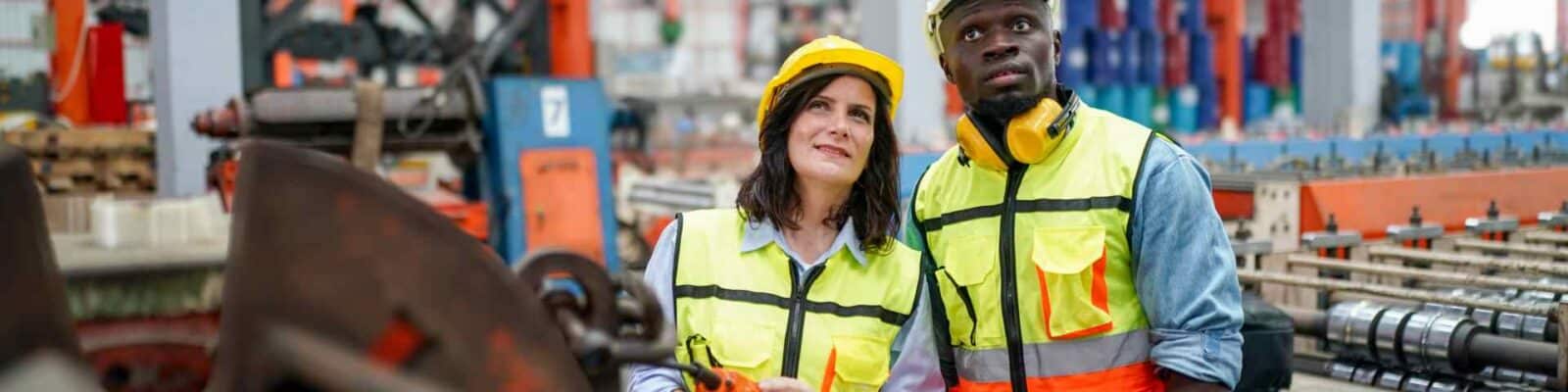
Industrial workers inspecting heavy machinery, ensuring operational and safety standards.
Benefits of Lean Manufacturing for Production Optimization
Increased Efficiency
Lean manufacturing significantly enhances efficiency by streamlining processes and eliminating waste. By focusing on value-adding activities, organizations can maximize output while reducing unnecessary expenditure of resources. This approach enables companies to respond swiftly to customer demands, maintaining an agile presence in the marketplace.
The integration of industrial equipment maintenance practices within lean methodologies ensures equipment operates smoothly, minimizing downtime and enhancing throughput.
Cost Reduction
Implementing lean principles leads to substantial cost savings. By refining production processes and reducing excess inventory, companies can lower operational costs while maintaining quality standards. The focus on continuous improvement also leads to reduced waste and optimized resource use.
Effective adoption of lean strategies can result in minimized defects and less rework, further contributing to cost reductions. This financial efficiency is crucial for maintaining profitability in competitive markets.
Moreover, adhering to warehouse safety best practices ensures a safe working environment, avoiding unexpected costs related to workplace incidents.
Quality Improvement
Lean manufacturing is devoted to enhancing product quality. By enforcing stringent quality controls and continuously improving production processes, defects are minimized, and quality is upheld. This dedication to excellence not only boosts customer satisfaction but also strengthens brand reputation.
Consistently high-quality products foster customer loyalty, providing a competitive edge that is critical in today’s rapidly evolving industrial landscape.
Common Challenges in Implementing Lean Principles
Cultural Resistance
Cultural resistance is often a significant barrier to implementing lean manufacturing successfully. Employees accustomed to traditional practices may be resistant to change, fearing the unknown or the potential for increased workload. To combat this, organizations must invest in effective change management and clear communication.
Engaging staff in the adoption process ensures a smoother transition and facilitates wider acceptance. Collaborating with teams on cutting tool selection guides and other essential procedures can help mitigate resistance by showcasing tangible benefits of lean implementation.
Complexity in Processes
Lean manufacturing requires comprehensive analysis and redesign of existing processes, which can be complex and time-consuming. Businesses must allocate resources and time for this transformation, calibrating their operations in line with lean principles.
By breaking down processes into manageable segments, companies can navigate this complexity more effectively, ensuring a gradual but consistent application of lean methodologies.
Sustaining Changes
One of the most challenging aspects of lean implementation is sustaining changes over time. As new challenges arise and market demands evolve, maintaining the momentum of initial initiatives can be difficult.
Regular review and adaptation of strategies are crucial in sustaining improvements and preventing a reversion to old habits. Failure to do so may lead to complications such as equipment malfunctions. By continually revisiting bearing failure analysis and other crucial elements, businesses can ensure they remain aligned with lean objectives.

Safety officer discussing injury prevention with an employee in a warehouse setting.
Lean Manufacturing Case Studies: Success Stories
Case Study 1: Automotive Industry
In the automotive industry, lean manufacturing has been a game-changer. Many companies have adopted lean principles to fine-tune their manufacturing processes, thereby eliminating waste and enhancing efficiency significantly.
A prominent car manufacturer implemented Just-In-Time production, which drastically reduced their inventory costs and improved delivery times. This shift resulted in higher operational efficiency and enhanced customer satisfaction.
Furthermore, employee morale was boosted through continual involvement in process improvements, allowing the company to sustain high-quality output.
Case Study 2: Electronics Manufacturing
The electronics sector has also benefited greatly from lean methodologies, particularly in waste reduction and process efficiency. Companies in this industry face rapid technological advancements and high customer demand for quality.
- Waste reduction: Implementing lean techniques minimized excess materials and improved resource allocation.
- Process efficiency: Enhanced workflows reduced production times and increased output.
- Improved quality: Continual quality checks and refinements ensured products met the highest standards.
Lessons Learned
These case studies demonstrate the profound impact of lean manufacturing in diverse industries. Key lessons include the importance of top-down commitment to lean principles and the benefits of fostering a culture of continuous improvement.
Implementing these strategies enhances productivity, cuts costs, and strengthens competitive advantage, ultimately leading to reduced maintenance expenditures and improved material handling safety protocols.
Future Trends and Innovations in Lean Manufacturing
Digital Transformation
Digital transformation is reshaping the landscape of lean manufacturing. By integrating advanced technologies such as IoT and digital twins, companies can monitor processes in real-time, leading to vastly improved decision-making and operational flexibility.
This technological adoption enables predictive maintenance techniques and enhances power transmission efficiency, ensuring a seamless operation with minimal downtime.
Incorporating AI and Automation
The incorporation of AI and automation in manufacturing processes marks a significant leap forward. These technologies allow for enhanced precision, reduced lead times, and minimized human error, aligning perfectly with lean objectives.
AI-driven analytics provide insights into production trends and efficiency, optimizing resource allocation, and improving overall throughput.
The adaptability of automated systems facilitates quick responses to changing market needs, giving manufacturers a competitive edge while reducing operational costs and potential equipment failure.
Sustainability and Eco-friendly Practices
As environmental concerns continue to rise, lean manufacturing is incorporating more sustainable practices. Companies are adopting eco-friendly methods to reduce carbon footprints, minimize waste, and promote energy efficiency.
This focus on sustainability not only aligns with global environmental goals but also serves as a powerful marketing tool, attracting environmentally conscious consumers.
The drive for sustainability complements lean’s core strategy of minimizing waste, offering a comprehensive approach to efficient and responsible production.
Frequently Asked Questions about Lean Manufacturing
Lean manufacturing is a comprehensive approach to production that maximizes value by reducing waste and improving processes. It involves streamlining operations and focusing on efficiencies that add value for the customer.
Lean manufacturing improves efficiency by systematically eliminating waste through techniques such as Just-In-Time and continuous improvement. This results in a streamlined production process, with reduced costs and faster delivery times.
Key principles of lean manufacturing include waste elimination, continuous improvement (Kaizen), and focusing on customer value. These principles help align production processes with business goals more effectively.
Common challenges in lean implementation include cultural resistance, complexity in process changes, and sustaining improvements over time. Addressing these challenges requires robust strategies and active leadership engagement.
Lean manufacturing positively impacts quality control by emphasizing systematic quality checks and continuous process improvements, which reduce defects and enhance the overall quality of the product.
Tools commonly used in lean manufacturing include Value Stream Mapping, Kanban systems, and 5S methodology. These tools help visualize and optimize the entire production process, enhancing performance and efficiency.
Lean manufacturing contributes to sustainability by minimizing waste and promoting eco-friendly practices. It focuses on energy efficiency and sustainable resource management, aligning production goals with environmental stewardship.